How to Make Limoncello


zzzzLinoncellooooo

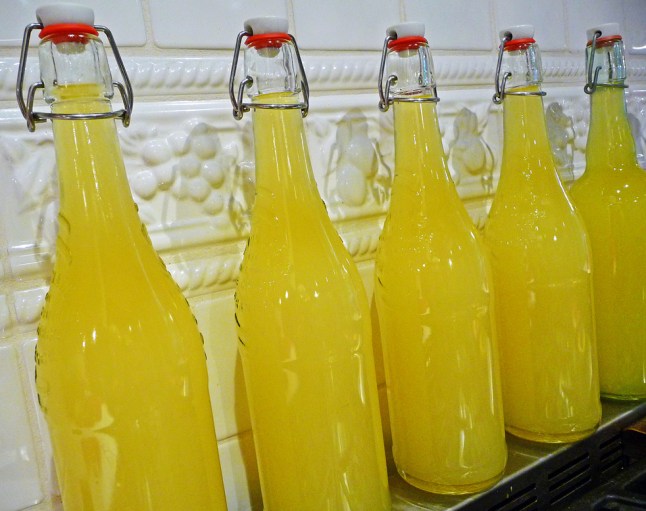
Bottles of Homemade LIMONCELLO

.

zzzzzzzVincenzoManzoVillaMARIA

My PAL Vincenzo Manzo at His Lemon Farm VILLA MARIA

MINORI ,  ITALY

On The AMALFI COAST


RECIPE :  AMALFI COAST LIMONCELLO


INGREDIENTS :

  • zest of 6 or 7 large organic lemons
  • 1 litre or quart of pure grain alcohol or vodka
  • 5 cups (1250 ml) water
  • 3 cups (700 gr) sugar

Preparation :

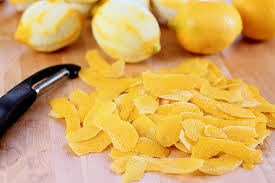
Peel the zest from the lemons with a vegtable peeler and place them into a large glass jar.  Try to avoid the bitter white pith of the lemon skin, under the yellow zest.

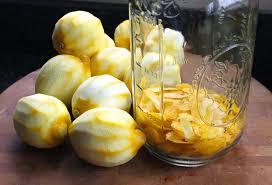
Add the alcohol to the jar with the lemon zest.

Cover the glass jar with plastic wrap and store it in a cool place for 7 days

On the sixth day: Boil the water and add the sugar to the boiling water. Stir the sugar until it is fully dissolved in the water. Set the sugar syrup aside to let it cool over night.

On the seventh day: Strain the lemons peels from the alcohol and discard the peels.

Pour the sugar syrup into the glass jar with the alcohol and stir well.

Serve chilled, from the refrigerator or freezer.


zzzzlemon

 Peel LEMONS with VEGTABLE PEELER


zzzzLemoncell

Place Lemon Peels in JAR with Grain Alcholo or VODKA

.

zzVillMARiaLEMONS

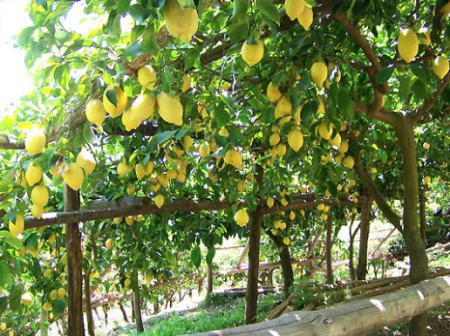
LEMONS   … Agroturismo Villa Maria, Minori

Screen Shot 2015-10-24 at 9.45.16 PM

COOKING ITALIAN

GREATEST HIT COOKBOOK

by Daniel Bellino Z

.

zzzzzzVillaMar

VILLA MARIA

MINORI

.

zzMElimoncelloCAPRI

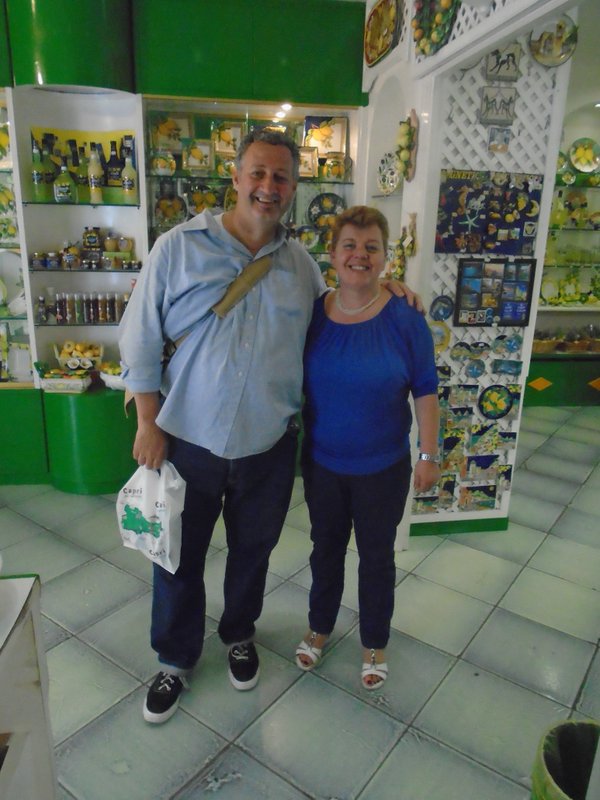
Me & The LIMONCELLO LADY , CAPRI

.

Screen Shot 2015-09-30 at 8.52.13 PM

MINORI, Italy

.

4fe76-screen2bshot2b2015-06-202bat2b2-36-182bpm

SOPHIA LOREN

.

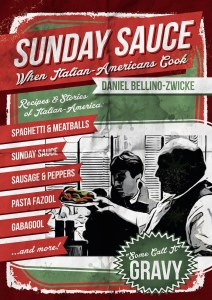
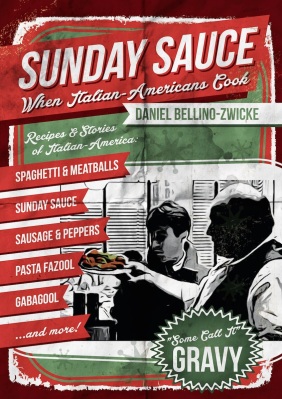
21336-sundaysauce-small-new-cvr

SUNDAY SAUCE

When Italian-Americans Cook

Daniel Bellino-Zwicke

.


Meatball Parm Mondays

 
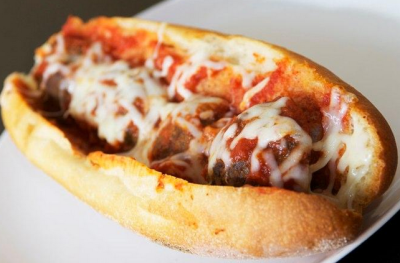
The MEATBALL PARM
Meatball Parm Sandwich

<b>The Meatball Parm Sandwich, as stated earlier, is one of thee Italian-American males most treasured of all things in his life. Things he needs to live a happy, normal, satisfying life, and an actual necessity for true Happiness. It’s right up there with Mom, Grandma, your Girl, wine, Sausages, and Sunday Sauce. “We ask not for much.”
No you do not have to be a Man or a Boy to eat one. Ladies and Girls eat them as well. It’s just that the male of the species happens to eat 5-times the amount that Italian-American females do. Not only that, but the male of the species holds Meatballs and Meatball Parms in much Greater Reverence, than do Italian females. They “Exalt” it, as the Meatball Parm, it deserves such adulation. The men and boys adore it and get quite excited at the prospect and act of eating one, the “Meatball Parm.” And the ladies who make them, know how much their boys love and cherish meatballs and the Meatball Parm Sandwich. Italian women want to please their men, their sons, so they make them tasty bowls of pasta, Sunday Sauce, Sausage &amp; Peppers and Meatball Parm Sandwich when their men desire them. Yes, we don’t need much; friends, family, good food and wine, and we’re happy.
Yes it’s true, Italian-American ladies and girls like this thing called the Meatball Parm as well, but they don’t get quite as excited about this sandwich as do the men &amp; boys do. You see, Meatball Parms are held quite dear to Italian men. Yes, it’s a guy thing, and more specifically, an “Italian Guy Thing.” Yes, Italian-American males have given the Meatball Parm Iconic Status within our lives and the realm of food. Why? We’re Italian, it’s as simple as that.
The Great Ritual of the Meatball Parm Monday and as it ties to the Sunday Sauce. You make the Meatballs for the Sauce, the Gravy. On Saturday you will buy all the meat; the Sausages and the rest of the ingredients for your Sunday Sauce (Gravy) to be made on Sunday. However, on Saturday you are already thinking about those Meatball Parms for Monday’s lunch.
Yes, we do Meatball Parms on Monday, following the previous days Sunday Sauce. You see, you have to think ahead. Every good Italian knows that when you go through all the effort and time it will take to make a pot of Sunday Sauce Gravy. You don’t just make it for Sunday’s consumption alone. No, that would be a waste of time to make just enough to eat on Sunday. Well, it wouldn’t be a waste of time, but your time will be better spent if you make more. It takes time, effort, energy, and work to make a Sunday Sauce, which of course is well worth the effort. You do not mind the work involved at all, for in the end, the “Rewards are Great.” A Sunday Sauce will yield, the beloved Sausages, Gravy, Braciole, succulent Ribs, and Meatballs for Monday’s Meatball Parms.
It does not really take much more time to make a larger quantity in order to have leftovers for the next day or two, and this is just what one wants to do, which is to keep the Sauce going, and going for another day, even two. And in those leftovers are the much Prized Meatballs for Monday’s Lunch of Meatball Parm Sandwiches. Yes, the men love and need Meatball Parms on Monday, for the ritual of the Meatball Parms on Monday is a Time-Honored tradition enjoyed by many. As the saying goes, “The Simple Pleasure of Life,” here it is quite apropos.
So, you see, on Saturday when one goes to buy the ingredients to make the Gravy, they automatically know to make sure they get enough ground meat to make plenty of Meatballs that will last the Sunday Supper as well as yielding numerous leftover Meatballs for Monday’s Meatball Parms. And there’s always assaults on the pot of dipping in and grabbing meatballs before you even sit down to the table. With Meatballs and Gravy, temptations are always great. Yes the men, methodically make sure that there are enough leftover meatballs for Monday’s lunch. When all are finished eating the great Sauce on Sunday, they set some Meatballs aside for the next days ritual of Meatball Sandwiches for lunch. These sandwiches will make any dreaded Monday so much better, that’s for sure.
And if there are leftover Sausages? On Tuesday one can make Spaghetti or Rigatoni with Sauce and Sausages, or even a Sausage Sandwich. Think ahead boys and girls, think of Monday and your Meatball Parm.


Excerpted from SUNDAY SAUCE  by Daniel Bellino Z


.

<b> </b>

Pasta

DSC01021


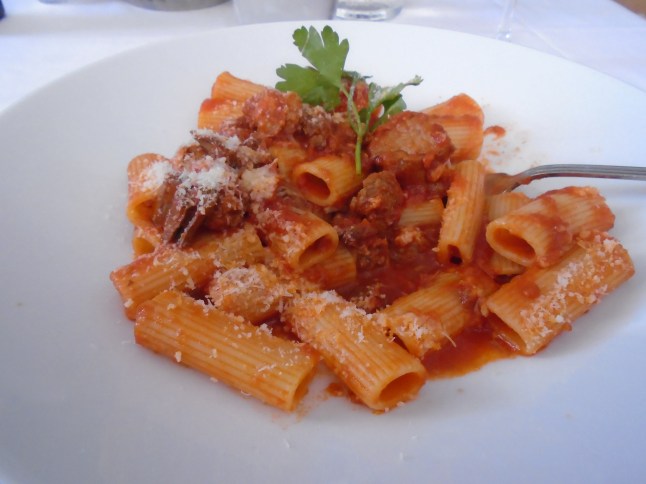
Pasta? Pasta, it’s one of America’s favorite foods. For Italians and Italian-Americans it’s the backbone of our diet of the food of and ethnic heritage of being Italian. Heck we’re weaned on the stuff, as you’ve already read of my first memories of my families food habits, the same as most other Italian-Americans with minor various here and there, depending on the region we’re from. We’re Sicilian, there are Calabrese, and others from Puglia, Genoa, and Abruzzo, while many come from Naples and it’s environs of Benevento, Avellino, Salerno, Ischia and other parts of the Mezzegiorno. Yes we’re weaned on Pastina, and in my case, a little joke I tell people I was weaned on Pastina & Cannolis. Well just the cannoli cream, as the shells are too hard and crunchy for little babies to eat, never-the-less, our mothers would feed us a little cannoli cream if they we’re eating a Cannoli at the time.

So, pasta? It’s the base of our Italian-American cuisine and diet. In fact, we probably eat it more than our Italian brethren back there in Italy. Yes, it’s true! We’re brought up with pasta, eating it several times a week, and always on Sunday, either with or before our beloved Sunday Gravy, the centerpiece of most Italian-American Sunday meals. Pasta, we eat all shapes and numerous sauces dressing it. There are some 300 varieties of Pasta, dry semolina pasta, and the fresh stuff, like; Ravioli, Tortellini, Gnocchi, Tagiatelle, Cavatelli a.k.a Gava-deel and more. There our 300 types, but most people eat about a dozen or so on a regular basis. We love Raviolis which my mother usually served once a week, and she always got both meat and cheese raviolis from the pasta shop that made them fresh, but dressed with my mothers wonderful home-made Sauce. Dry pasta is a staple of every and all Italian homes in both Italy and here in America, the most popular types being; Spaghetti, Rigatoni, Penne, Linguine, Ditalini (for Soups), Pastina (for babies and little children), Fusilli, and Cavatappi. If you’re from Puglia you might be partial to Orecchiette, either store bought or homemade by grandma.

When we were growing up in the 60s and 70s, there was not so many imported pastas as there are these days. My mother usually always bought Ronzoni, which is the most famous American Maccheroni Company in the history of country. Ronzoni started and was made in New York, and being a local company and of such top-notch quality, it was the preferred brand in most Italian households in New York, New Jersey, and the Tri-State area. I used to have to go to the local grocery store to pick up some Spaghetti for my mom, which was always Ronzoni, and I can still hear my mom telling me to get # 9 Spaghetti which was the thicker one, and you could get spaghetti in various thicknesses, thus the numbering of the pasta to signify its size.

Yes, we ate pasta quite a lot. It’s tradition and is part of our everyday lives. It’s inbred that we love our pasta, and some might say that it runs through our veins, as does tomato sauce and olive oil that often dresses the pasta. Sure, Spaghetti with Tomato Sauce is easy to make, you cook up a big batch to make many servings, it’s real tasty, and easy on the old wallet to boot.

We’d eat Spaghetti Pomodoro a couple times a week, and there was always some kind of Meat Sauce as well, of which some called it Meat Sauce and others called it Ragu as it is known in the old country (Italy). We had different types of meat ragu our family being from Sicily. The meat ragu was usually made with ground beef or pork that was cooked with tomatoes and onion. The ragu could be made with a combination of beef & pork or just one or the other. Sicilian meat ragu is not as rich as Ragu alla Bolognese which has more wine and is cooked for a longer time, while often a Sicilian Ragu might not have any wine in it all, or far less than is in the famed Ragu Bolognese. As for Ragu Bolognese, we never even had it growing up, as we were from the south and my mother never even ate it, nor knew how to make this great Italian Meat Ragu, neither did any of my aunts who were great cooks and I had hundreds of meals cooked by them, they never made a Bolognese. I myself never even tasted Bolognese until I went on my first trip to Italy when I was 23 years old. Well, as far as Bolognese Sauce and I go, the rest is history, but we’ll get to that later.


So growing up, we ate Spaghetti w/ Tomato Sauce often. We’d have Lasagna about once a month, and it was always a special day when we did. We ate Raviolis once a week, and there was always Sunday Gravy of Sausage, Meatballs, & Braciole with some short pasta just about every Sunday. The pasta what we’d have with the Gravy was usually Rigatoni or Cavatelli, and it always had to be a short pasta. Or sometimes we’d have Ravioli as an extra special treat with the Sunday Sauce. Aunt Helen would take some of the sauce from the Gravy pot and she’d dress the fresh Ravioli with it. This was always after we had Salad or Antipasti. So we’d have the Raviolis with a bit of sauce from the Gravy pot, and after we had the Raviolis, we’d have the meats of the Gravy with some boiled potatoes on the plate with the Sausage, Meatballs, and Braciole. So when we had the Sunday Gravy, sometimes we’d eat the Maccheroni with the Meats and Gravy, and sometimes we’d have a little of just sauce without meat and have all the meats after the pasta depending on our mood of how we wanted to eat it that particular day.

So, we Italians also have pasta in our soups as in Minestrone alla Genovese, Pasta & Peas, or the famed Pasta Fagioli made with pasta and beans. Most often the pasta in soup would be ditalini, or it could be a mixture of short pasta or broken pasta (Pasta Rotta) from a few different packages of pasta that have already been opened in the house.

Pasta, we loved Spaghetti Vongole which we usually had in restaurants as a special treat. I didn’t get to eat Bucatini Amatriciana until that first trip to Italy where I had it in a wonderful little trattoria in Rome, and I’ve been making and eating it ever since.

Wow, I almost forgot, two of the pasta dishes my mother made most often, along with the Raviolis and Spaghetti, my mom also loved making Manicotti and Stuffed Shells, which are now that I think of it, pretty much the same dish, the only difference being the shape of the pasta which are both stuffed with Ricotta, Mozzarella & Parmigiano and baked in the oven with tomato sauce, and whenever we had Stuffed Shells or Manicotti it was always a special treat.


Excerptd from Mangia Italiano, Daniel Bellino’s new forthcoming book  …


DSC00195

PASTA

photo Daniel Bellino-Zwicke

at a Groceria, Napoli, Italy

e53f8-grandma-b-art-orig-7-15

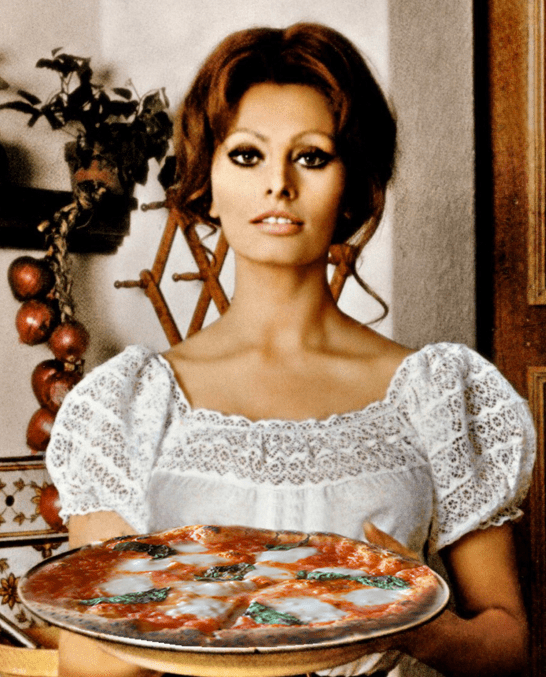
zzzSophiaPIZZA

SOPHIA


Espresso


ESPRESSO


Espresso, the making, consuming and enjoyment of a properly made Espresso is another
facet and time honored tradition of Italian-Americans and their culture. We do
love our properly pulled Espresso. A properly pulled Espresso is a thing of
beauty and refinement, and must be done just so. We can and do make Espresso in
our homes with either a Neapolitan or Moka brewing device, and now these days, there
are any number of expensive new-fangled home espresso makers, more on that
later.
Some
might be surprised but the great art of the perfect Italian Espresso has been
around for just about 110 years. Yes Italians drank Espresso before that, but
it was only developed into a “Fine Art” that it is today, just a little more
then a hundred years ago or so when Luigi Bezzera developed the first Espresso
Machine that we know today. After this landmark in Espresso history, the
consumption and popularity of Espresso grew rapidly. Caffes and Espresso Bars
popped up everywhere all over Italy. These Espresso Bars were places to have an
Espresso and socialize. And in Italy, there is a whole act and ritual to going
to an Espresso Bar for your habitual morning coffee. And it’s not just for the
Espresso but some socializing, a bit of chit-chat, gossip, political talk,
sports (Soccer/Futbol), this-that-and-every-other-thing. This morning Espresso
is quite ritualistic in Italy, and is practiced by most, and in every corner of
the country, on every other street corner in cities like; Rome, Bologna, Palermo,
Milano, Verona, all over. And it is quite the sight to see, especially if
you’re an American going for the first time. In caffes and bars in Italy it is
at the stand-up Espresso bar where all the action takes place. When you go into
a caffe (a.k.a. Bar) in Italy and have a Espresso, Cappuccino, whatever, and
sit at a table, that Espresso will cost you an additional 50% or more than it
will if you consume it standing up at the counter at the Espresso Bar. It’s a
tax thing. The caffe owners are taxed on their tables and this tax gets passed
on to the customer. Basta!
Anyway, the ritual of the early morning Italian Espresso? People get dressed, leave
their homes and are on their way to work, but they don’t go right from their
house to their job. No they have to have an Espresso and the ritual of the
Espresso and some Chit-Chat (BS) with a quick stop at their favorite local
caffe. They might leave their house then go to an Espresso Bar near their home
before going to their job, or they may head to their job, then get an Espresso
at a favored caffe near the work-place. They might even do both, get an
Espresso in their neighborhood before heading to work, then stopping at an Espresso
Bar close to their workplace before bopping into work.
     Well, that’s the way they do it in Italy,
quite a ritual and amazing to see. In America, Italian immigrants to cities
like New York, Boston, Providence, and Philadelphia opened Social Clubs that
served Espresso, maybe some sandwiches, soup, soda, Biscotti, and Anisette
Toast, and Cannoli that they bought from a nearby baker. These Social Clubs
which sprung up in neighborhoods like the Lower East Side of New York or what
is now called Little Italy, in Boston’s North End, and San Francisco’s North
Beach. These Social Clubs (Caffe) were primarily of and for the working class,
and were for Italians. The clubs were for Italians, and people of other
nationalities did not go into them unless they were brought in by an Italian
guy from the neighborhood. And that’s the way it was back then.
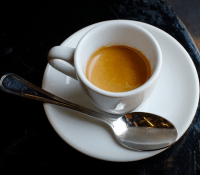
Espresso e Dolce at home? When I was growing up and went to my Aunt Fran and Uncle
Tony’s house in Lodi, or to Aunt Helen’s for Sunday Dinner, and we ate our
meal, and it moved on to coffee and dessert, this was quite a sight that brings
back nice memories for me to this very day. And it was a wonderful ritual, and
unlike the quick grab your Espresso, Chit-Chat for a few minutes and run out
the door as is done at caffe’s and Espresso Bars in Italy, the Espresso was
anything but Espresso (Fast) at Bellino Family meals, as is with millions of
Italian-American families over the years. No, this was no quick hit-and-run
affair. The coffee and dessert course at our family gatherings was the longest
portion of our all day affair of the Sunday Meal. My Aunts and Uncles would sit
around the table, we (the Kids) would too, but we would go back and forth,
cause this sit-down at the table usually lasted about 3 hours, maybe more. We’d
sit down, and Aunt Fran and Aunt Helen had the Neapolitan going with Espresso.
The table was laden with all sorts of goodies; Cannolis of course, one or two
different cakes, and an assortment of Italian Cookies and Pastries
(Sfogiatelle, Mille Foglie). There was always enough to fill Pastry Shop
Showcase, “I kid you not!”
The
table full of my aunts and uncles was a wonder. They’d sit around drinking
coffee, eating pastries, and talk-talk-talk, about politics, sports, gossip,
this-that-and-everything. My uncle Frank who was the Ring-Leader could have
solved all the Worlds problems, right there at that table, filled with Cannoli,
Biscotti, Coffee (Espresso), cakes, Anisette, heated discussion, laughter, and
a “Bundle of Joy,” all over Espresso.
Aunt Helen and Aunt Fran made the Espresso in Neapolitan Espresso Maker. The
Neapolitan is from Napoli, Italy. It was developed so Neapolitans (and all
Italians) could make Espresso in their homes. The Neapolitan is a two-piece
device whereby, you fill the bottom of the vessel with water, the ground
espresso goes in the middle and you screw on the empty top. To make Espresso
with the Neapolitan you put the device on the stove over a flame with the piece
filled with the water on the stove. The water heats, and when it comes to the
boil, you turn the flame off, flip the vessel over so the hot water is at the
top and will then drip down through the ground coffee to make the Espresso. The
Espresso is not as good as that you’d get at a caffe or Espresso Bar with a
large machine, but it’s good enough, and adding a little shot of Anisette is
never a bad thing, something my Uncle Frank always did. This is called a Caffe
Corretto, the act of adding a few drops of your desire liquor into your
espresso. You can add; Grappa, Sambucca, Brandy, Anisette, or other liquor to
make a caffe corretto. At Aunt Fran & Unlce Tony’s, it was always Anisette.
Basta.
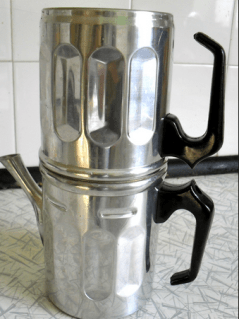
 
 
My NAPOLITAN
 
I Bought in NAPOLI 1987


As a child it was always something to see, watching Aunt Fran or Aunt Helen go
through the pleasant little ritual of making Espresso in that curious looking
contraption, the Neapolitan. As I said, it always intrigued me, and when I took
my first trip to Italy and was in Napoli walking through a street market and
spotted a merchant selling Neapolitans and other kitchenware’s, I just had to get myself one, a Neapolitan of my own and from the great city it was invented in, Napoli. I also brought back some
beautiful ceramic plates from nearby Vietro sul Mare on the nearby Amalfi
coast, and I’ve been making Espresso with my Neapolitan (bought in Napoli), and
eating Spaghetti on those beautiful Amalfi Coast Plates from ever since, a joy,
and a way to bring Italy into your own American home. Doing so, brings back
beautiful memories of; Positano, The Amalfi Coast, Sicily, and the rest of
Italy. If you can’t be there (which is a shame), then bring Italy into your
home. And that is what we do, every time we sit down to a meal, a glass of
wine, or a simple little cup of Espresso, “we bring Italy home.”


ESPRESSO is Excerpted from   SUNDAY SAUCE by Daniel Bellino Zwicke


SUNDAY SAUCE  –   When Italian-Americans Cook 

Available in Paperback & Kindle on Amazon.com


 .
.
  
Cannolis Were Always on The Table


And a Bottle of Anisette
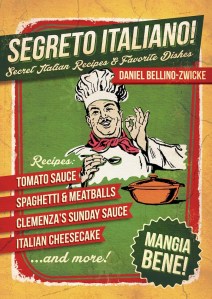
SECRET ITALIAN RECIPES
 
A MOKA POT
For Making Espresso
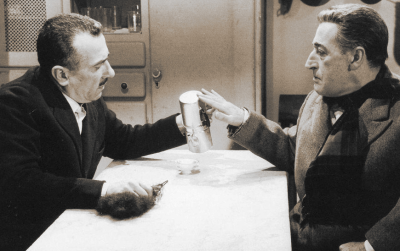
Toto & Peppino 
with a NAPOLITAN
in
The BAND of HONEST MEN 1956


.
5 Star Review of Segreto Italiano by Daniel Bellino

680da-segret-small


If you’re just beginning to learn Italian cooking – or you’re advanced…..you’ll find at least ONE recipe in this book you’ll have to try. But more likely, you’ll find several. What I love about this selection of recipes is that they include strictly Italian; Sicilian; and Italian-American dishes. The author recognizes Italian-American as a cuisine unto its own. Falling into all three categories myself, I have a large collection of Italian and Sicilian cook books, but none specifically for Italian-American. I think this is about as close as I’ll get. Dishes from my childhood (along with some charming anecdotes from the author) are in here and my mouth waters just thinking about which one I’ll make first.

The recipes are rather simple just like *real* Italian food. I remember the time I asked Zia Elena for her spaghetti sauce and meatball recipes. To me, she was the Queen of authentic and delicious Sicilian/Neopolitan cookery (she married one of those northern Italians, so learned to cook for him. I had to ask her on the sly as no one would admit to her superior culinary skills in front of their own mothers!) Her list of ingredients was short and of course, delicious. Most Italian recipes are like that —- not complicated, but delicious.

I give this book two paws up! For the price, it’s such a deal, it should be in any cook book collection which focuses on the three types of Italian food. And lest the reader say, “But I thought Sicilians *were* Italians…” You can read up on this on the internet and see that Sicily had hosted numerous types of colonies for hundreds of years by everyone from Greeks, Arabs, Byzantines, even Scandinavians!. It only became part of Italy in 1860. Then in 1946 it became an autonomous region. Why does this matter? Sicilian cooking has many influences and so differs, although at times in subtle ways and sometimes in a complete composition expression to the more northern Italian food and customs. Due to Sicily’s proximity to Greece, a dear Greek man once told me (as I choked on the sweetness of the baklava he had just given me), that Sicilians were “just Greeks” who wanted to be Italians. May be a grain of truth in that.!

If you love this outrageously ethnic food, then I highly recommend this. It’s the kind of book I wish Zia Elena would have written and left to me!


Thanks, Daniel


by Kitty Siracusa


zzSOPHIAloren-02


Sophia Loren  “Mangia Bene” !!!

zzzzME

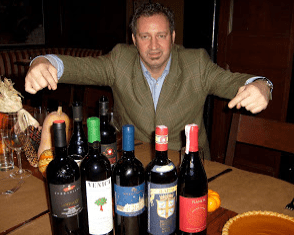
Author Daniel Bellin

with Wines from Some of Best Italian Friends Vineyards

.

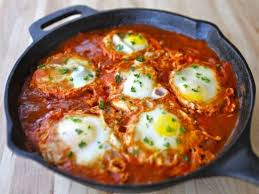
Eggs in Purgatory

zzEggsPurgatory


Eggs in Purgatory is a tasty Italian Egg dish that’s quick and easy to make. you can make it either spicy or mild. It is usualy made spicy but the option is up to you. Serve with some good Italian Bread for a nice light lunch, breakfast or in-between meal snack.


RECIPE :

6 large Eggs

1 1/2 cups tomatoe sauce

6 tablespoons Olive Oil

1/3 cup grated Pecorino Romano

3 tablespoons chopped Fresh Parsley

Place tomato sauce in a large oven proof pan and heat. Turn oven on to 400 degrees.

Fry eggs two or three at a time in the olive oil in a non-stick frying pan for 1 /12 minutes on hih heat. Remove eggs from pan and add to pan with tomato sauce.

Once all the eggs have fried in the pan and added to pan with tomato suace, sprinkle with half the cheese and put in oven for 3 minutes.

Remove pan from oven and serve two eggs to eacch person. Sprinkle on remaining cheese over eggs. Sprinkle parsley over eacch plate and serve with good Itlian Bread.

BASTA !!


e53f8-grandma-b-art-orig-7-15

..


.

Pasta with Cucuzza “Gagootz”

ZZZZZZcucuzza-nutlyNJ-400px


 Growing Cucuzza in your backyard .. An Italian-American time-honored Tradition

PASTA con CUCUZZA

   Pasta & Gagootz !!!


Pasta & Gagootz is a long time favorite with the Bellino Family. Cucuzza, a.k.a. Gagootz is oh so Sicilian, and third only to Eggplant (Melanzane) and Artichokes, as the most popular and loved vegetable of all. Well yes there’s tomatoes and we love cauliflower quite a bit too, but Gagootz? Yes Cucuzza is the big Italian Squash eaten mainly by Italian-Americans, and mostly those of Sicilian and Neapolitan origins.  Even in the Italian-American community, still not many  know of this amazing Baseball Bat sized vegetable that most Sicilians do. So yes Cucuzza is ours, we Sicilians and other Southern Italian peoples, but not everyone you see. Hey, we love to share, but once in a while we like to keep a few things to ourselves. Doesn’t everyone? My mom used to make this often, along with Zuppa di Cucuzza from her mothers traditional recipes from Lercara Friddi. The recipe is oh so Sicilian, tasty and whimsical too. If you make it, you and your guest are sure to love it, as we Bellino’s have for more than 100 years now. Mangia Bene!

RECIPE : PASTA GAGOOTZ

1 large Cucuzza (Italian Squash)

1 medium Onion, peeled and chopped

¼ cup Olive Oil

1 teaspoon Red Pepper Flakes

4 cloves Garlic, peeled and sliced

1 – 28 ounce can crushed tomatoes

1 pound Green Beans, cleaned and cut in half

¼ cup fresh Basil leaves torn in half

1/3 cup grated Pecorino Romano Cheese
Peel the Cucuzza with a vegetable peeler and scoop out an large seeds if there are any and discard. Cut the Cucuzza (Gagootz) into 1 ½” pieces.

Place Cuccuzza and olive oil in a 6-quart pot and cook on low heat for 5 minutes. Add onion and cook for 4 minutes more.

Add garlic and cook on low flame for 2 minutes. Add red pepper flakes and cook 1 minute while stirring.

Add tomatoes and cook for 20 minutes, stirring occasionally with a wooden spoon.

While the sauce is simmering cook the green beans in a large pot of boiling salted water for 3 minutes. Drain the beans in a colander and put in the pot of sauce after it has been simmering for 12 minutes. Continue cooking for a total cooking time of 40-45 minutes for the sauce.

Add basil and cook two minutes.

Cook pasta according to directions on package. When finished cooking, drain the pasta in a colander, reserving about 7 tablespoons of the pasta cooking water.

Put the pasta back in the pot it cooked in. Drizzle on a little olive oil and mix. Add 1/3 of the sauce to the pot with the pasta and mix.

Divide the pasta among four plates. Top each plate of pasta with a little more of the sauce. Give a plate to each guest, pass the grated cheese and enjoy.


Pasta Gagootz … 

Excerpted from GRANDMA BELLINO’S ITALIAN COOKBOOK     by Daniel Bellino Z

 
e53f8-grandma-b-art-orig-7-15
zzPastaGAGOOtZ
PASTA GAGOOTZ


This and other Great Sicilian Recipe
in GRANDMA BELLIO’s ITALIAN COOKBOOK


zzGagootz
 
 
Stewed CUCUZZA
a.k.a. GAGOOTZ
.

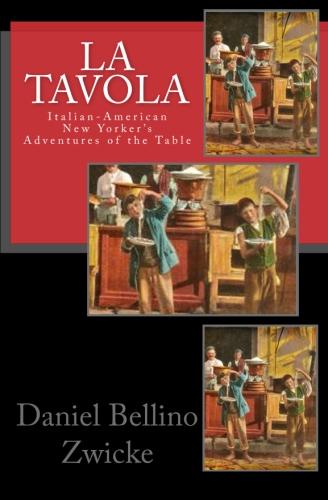
La Tavola is Greenwich Village Italian-American

zLaTAVOLA


Ever Dream of taking a Wonderful Journey. A Journey through Italian-American New York and Italian America., complete with pots of Sunday Sauce, Ethereal Bolognese Sauce, Platters of Antipasto, Perfect Espresso, with trays of Cannoli and Sfogiatelle. Do you Dream of one day Eating the famed Christmas Eve, “Feast of the 7 Fish” or crave a perfect plate of Spaghetti Carbonara? Do you have visions of the Amalfi Coast of Lemoncello, Fiano, and a flawless Plate of Linguine al Vongole. Would you like to know how to throw the perfect Italian Dinner Party, complete with Antipasti, Pasta, Chianti, and Dolce, while the sounds of Frank (Sinatra) and Dino play along? Do you want to know which are the best; Italian Restaurants, Caffes, Pastry Shops, and Pork Stores. Would you like to know how to make the Perfect “Negroni” or pick out the perfect Italian Wine and how to make a textbook Bolognese? Where to go in Italy and what to see? If you’d like to live these things, or just read about them vicariously, then take the journey, the Beautifully Wondrous Journey of La Tavola. Eat as Al Pacino, Jake LaMotta, Sinatra, and Dino had eaten over the years. La Tavola is part Cookbook, Guide-Book. Some have said it’s like a Italian-American New York version of a YEAR in PROVENCE, but with Italian Food in New York, and with Italian-Americans instead of French Food, people, and places? LA TAVOLA entertains and Inspires with stories, antidotes, and recipes of Sunday Sauce (Gravy), Sausage & Peppers, Meatball Parms, and the “FEAST of The 7 FISH” Then MANGIA! Italian-American New Yorker’s Adventures of the Table. With 30 Wonderful Bellino Family Recipes.


Read About  : Caffe Dante, John’s Pizzeria Napoletan, Caffe Reggio, Facicco’s, and more.

La Tavola is Greenwich Village NEW YORK ITALIAN  … Get IT !!!